What belongs in a brand bible?
Here’s a scenario you might recognize: You make a great branding decision, like finally landing on a color palette or figuring out exactly how your brand should sound. Three months later, you’re staring at a blank Canva document trying to remember what you decided, and second-guessing again, and rebuilding from scratch. Again
That’s the problem a brand bible solves.
A brand bible — also called your brand guidelines, brand style guide, or brand book — is a single place where every decision about your brand lives. It’s the difference between a brand you have to piece together again every time you go to create something and one you can run on autopilot because the thinking is already done and written down.
The catch is that most people think their brand bible is just their logo and colors. It’s so much more than that. Here’s everything that belongs in yours.
Your brand foundation
Before you create anything visual, your brand bible needs to open with the strategy underneath it all. At a minimum, capture your Unique Value Proposition, Brand Mission Statement, and Brand Story. These three things are the foundation that you’ll build the rest of your brand around. They tell you where you fit in the market and what makes you different from your competition.
Details about your audience
Your brand bible needs a crisp picture of what your customers really look like. Forget demographics (which don’t tell us anything about what motivates someone to buy) and instead think about the real human on the other end. What keeps them up at night? What do they want to avoid? What are their goals and who do they want to become? The goal is to get specific enough so that there’s a real person in mind, not a vague group of people. Everything you write later — every headline, every post — gets easier when you know exactly who you’re talking to.
Your brand archetype and personality
There are 12 brand archetypes and every single brand is made up of some combination of them. You’ll want to identify yours because it helps give you a shortcut to the personality traits that you should highlight. If you’re a rebel brand that means you’ll want to lean into bold colors and bold statements. If you’re a magician brand that means you’ll want to use words like “transform” and “possibility,” always reminding your customer that something big is waiting just around the corner.
If you’re not sure where to start with brand archetypes, you can watch a free video lesson on the subject here.
Your brand voice and tone
This is one of the most useful things to actually write down somewhere, because your writing style is where consistency often falls apart. Capture a few voice principles (for example: warm but not cheesy, expert but not jargon-heavy) and include examples of content you’ve written that feels really on brand. If you ever use AI to write your content, be sure to feed it information about your brand voice so it can help you stay consistent.
Your visual language
Now, and only now, do we come to the visual stuff. By this point in the process, your visuals aren’t arbitrary decisions about your favorite colors or what looks nice; they’re the expression of your brand story and your brand archetype.
This is usually the largest section in a brand bible and should include your color palette (Not sure how to create one? Here’s a post on color psychology in branding), your logo, your fonts, and your imagery style — the kind of photos, textures, or graphics that feel like you.Your key content messages
Finally, your brand bible should hold your key messages — the handful of core ideas your brand returns to again and again. What do you believe about your industry? What do you want your audience to know above all else? These are your content pillars and your go-to talking points. Once they’re written down, the “what do I even post about?” question mostly disappears, because every piece of content becomes an excerpt of ont of a few things you care about most.
Still figuring out how to build each of these components?
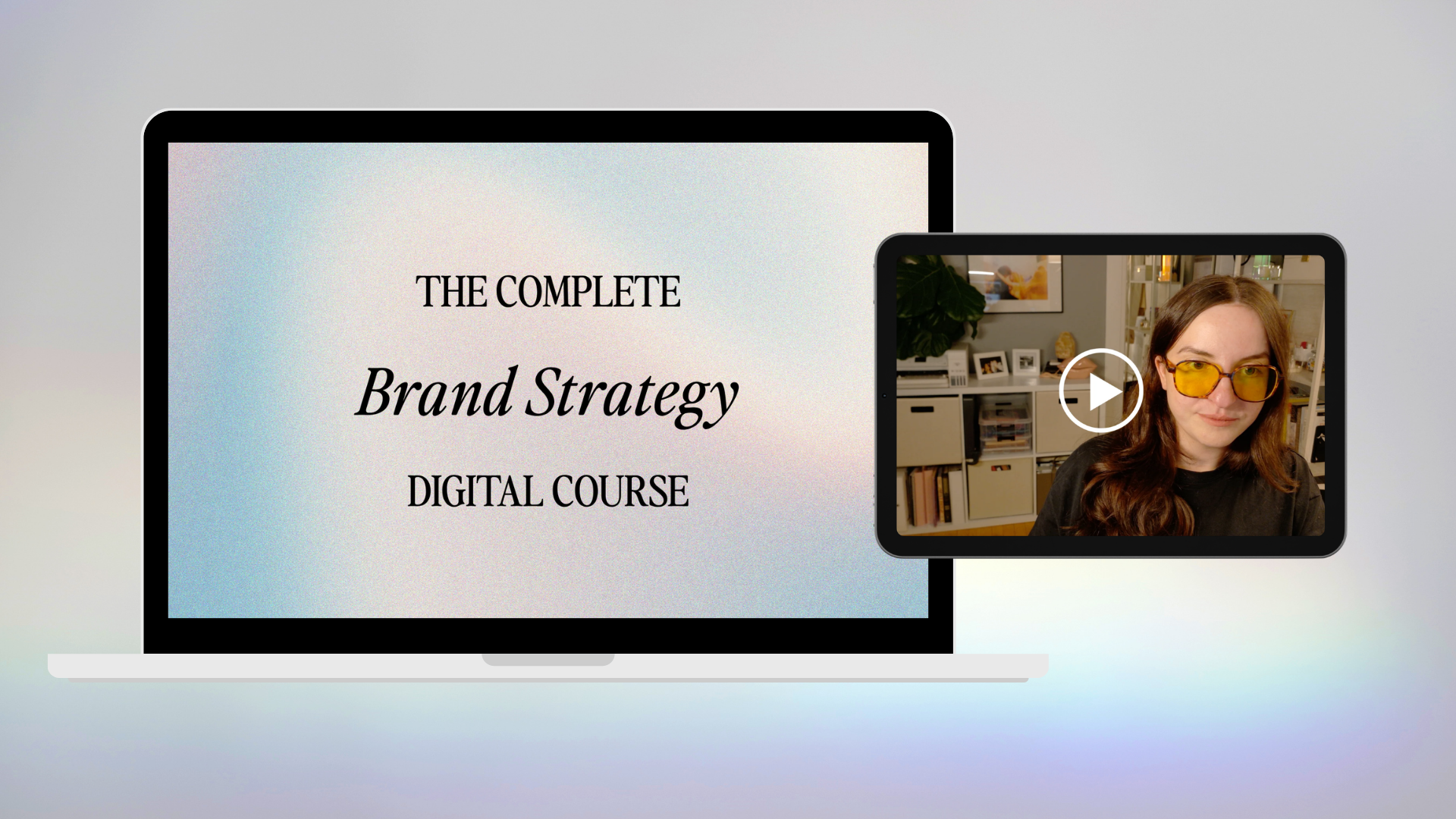
I break down every one of these assets (and more!) in my Complete Brand Strategy Course. If you’re sitting on an idea for a side hustle and not sure how to turn it into a legit brand, this course is the answer.
Watch a free lesson from the course here or learn more about the course here.